
Scholarship Spotlight: Greater Indy Habitat for Humanity Scholar Samantha Davenport
Scholarship Spotlight: Greater Indy Habitat for Humanity Scholar Samantha Davenport The Greater Indy Habitat for Humanity…
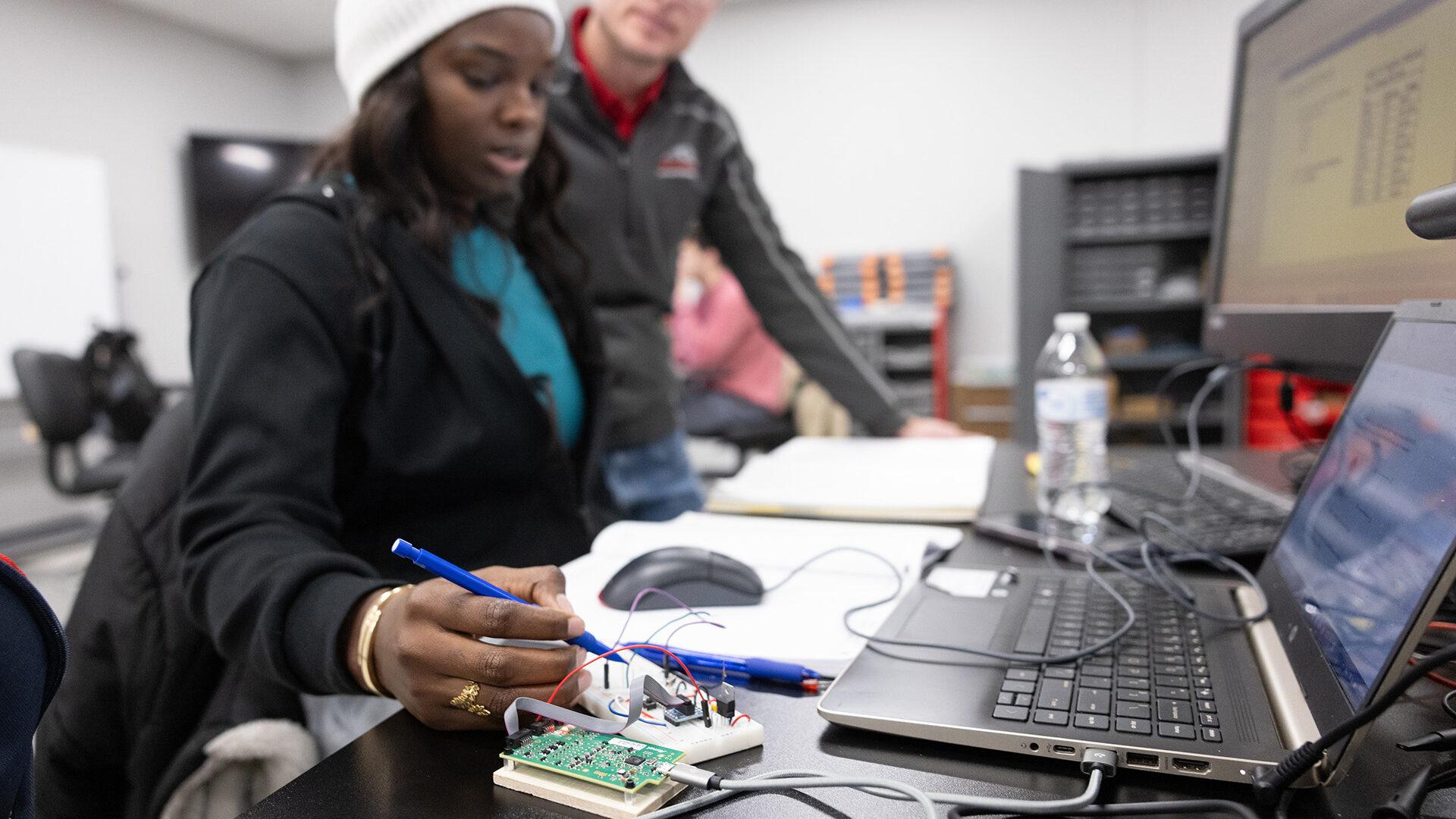
MIT’s Blueprint Labs studied the impact of the Amazon Future Engineer Scholarship on computer science undergrads and found significant impacts, especially on first-generation students and those from lower-income communities.
Filed In
Pursuing a degree in computer science or engineering is one of the surest ways to lay the groundwork for a solid future career. According to Indeed, the field of computer science is expected to grow by 22% in the next five years, and average salaries top $104,000/year.
But for too many learners, particularly first-generation college students and those who come from lower-income communities, the path to a computer science degree is full of barriers. In many cases, high schools in lower-income communities simply don’t offer the classes that spur interest and give students a background in the field. Additionally, students in both rural and urban lower-income communities are more likely to hold jobs or act as caregivers—and less likely to have regular home computer access or high-speed internet.
And that makes a huge difference: as Forbes reports, “Students with access to school-based computer science classes are also more than twice as likely as those without to say they plan to study the topic in college (42% vs. 18%, respectively) and that they aspire to have a job in the field (43% vs. 15%).”
For those who overcome these obstacles and move on to higher education, it’s still an uphill battle. As reported by PLOS, “Undergraduate students face additional financial barriers that hinder entry and success in STEM careers. Attending a prestigious (often costly) college or university improves STEM outcomes … [and] many STEM degrees require additional lab fees, fieldwork and fieldtrip expenses, and costly elective (but essential) activities, like study abroad programs and professional development opportunities.”
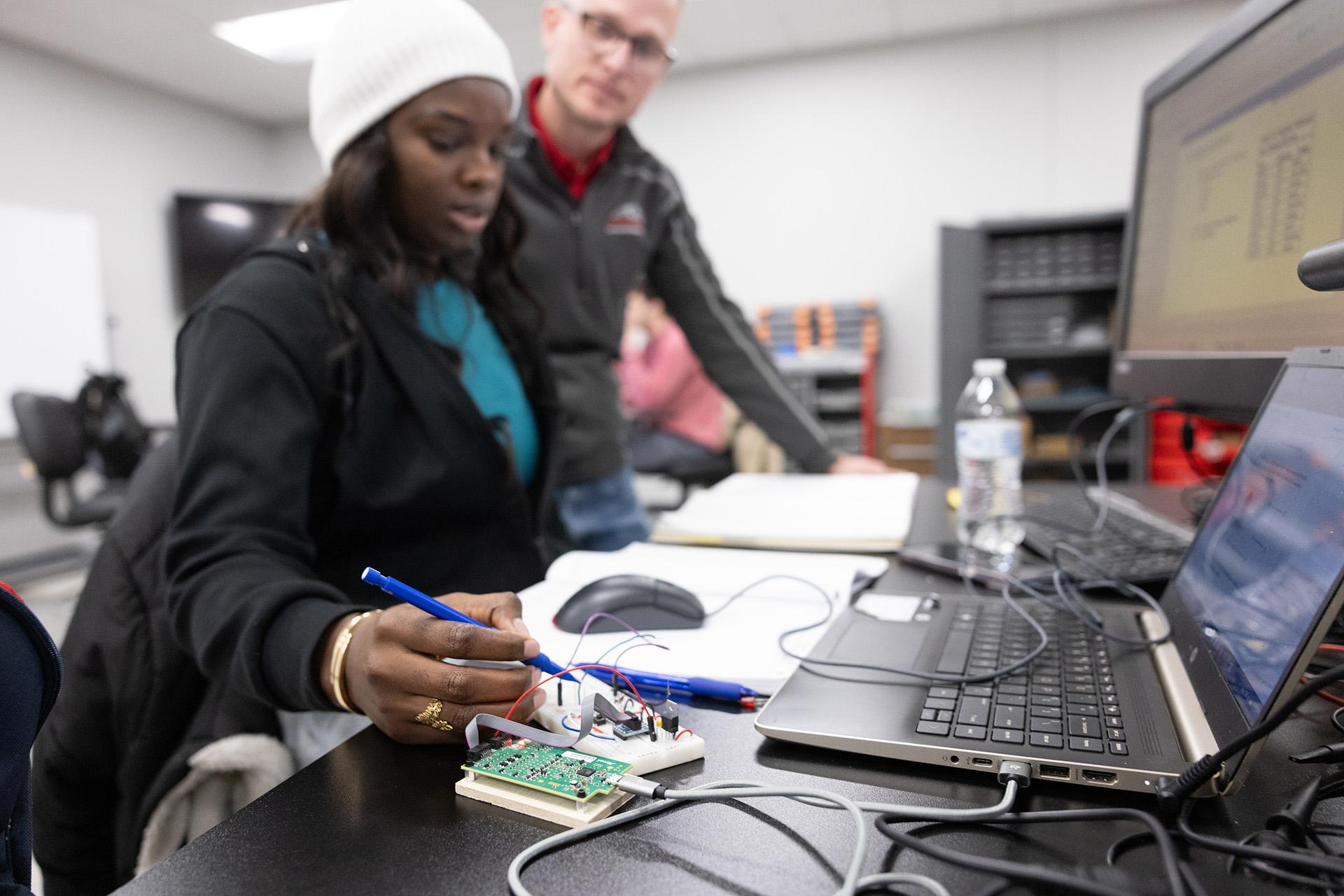 Between financial, academic and social barriers, degrees in computer science and related fields can seem far out of reach for first-generation students and those from lower-income communities. Increasing access to those degrees is why Amazon started the Amazon Future Engineer Scholarship Program—and a new study from MIT’s Blueprint Labs and Scholarship America illustrates just what a difference the program has made for its recipients since 2020.
Helping Students Afford Excellence
The Amazon Future Engineer Scholarship was created to provide high school seniors with opportunities to launch their careers in computer science. The program awards students with financial need scholarships of up to $40,000 over four years. Recipients also receive the chance to network with fellow scholars, have access to professional development opportunities and are invited to paid internships at Amazon.
To quantify the impact of the Amazon Future Engineer Scholarship, researchers Raymond Han (of Blueprint Labs) and Arien Telles (of Scholarship America) evaluated program data and outcomes from four years of participants.
Their research indicated that the scholarship “significantly increase[d] the total scholarship aid received by students, while decreasing their loan burden. Further, awards reduce the pressure on students to find jobs to support themselves in school, lowering the likelihood of work by 28 percentage points.”
This is especially important for students entering college from lower-income backgrounds. This population of students is more likely to work longer hours at off-campus jobs, so they can meet basic expenses and avoid taking out student loans—and spending more time working has a negative impact on academic performance and degree completion.
Fortunately, scholarships like Amazon Future Engineer give these students a third alternative to working or taking out loans. Specifically, as Amazon’s Abe Diaz points out on LinkedIn, “AFE recipients receive $3,700 more in aid, [and] reduce loan debt by $1,708 annually”—a boost that can make all the difference for students struggling to make ends meet.
From College to Career
 The financial lift provided by the scholarship also means students have more time and energy to focus on the professional development opportunities mentioned by PLOS. The study finds that recipients are 21% more likely to commit to a computer science major, and 24% more likely to pursue an internship related to their major. Han and Telles report that “Overall, the AFE program appears to shift students from work obligations during the school year toward summer internship opportunities with greater potential for career advancement.”
As Amazon Future Engineer scholars pursue those opportunities, they’re not just learning; they’re also making the connections that take them from student to professional. In one study, 73% of students who strongly agreed that they had role models in computer science said they’d consider a career in the field, while only 7% of those who strongly disagreed felt the same way.
Financial support, freedom to pursue opportunities outside the classroom and connections with mentors—that’s the impactful combination that led scholar Angela Magtoto to tell us, “Becoming an Amazon Future Engineer has been one of the most transformational and enriching experiences. As a first-year student, I gained hands-on technical experience with cutting-edge technologies like AI and machine learning which are opportunities I never imagined would be accessible so early in my career. Beyond the technical skills, I found a tight-knit community of scholars who genuinely supported one another.”
For students like Angela and her fellow scholars, the barriers to a computer science degree may have seemed insurmountable. But thanks to a system of support that includes financial help plus opportunities to break into the field, Amazon Future Engineer is creating tangible, impactful results that change workforces and student lives.
Our Scholarship Design team can help you create and administer a scholarship to transform your workforce. Get in touch!


Our team is here to help you achieve your goals and build your custom scholarship program.