Celebrating 50 Years of Partnership: The Toro Company and Scholarship America
Celebrating 50 Years of Partnership: The Toro Company and Scholarship America Since 1976, The Toro Company and Scholarship…
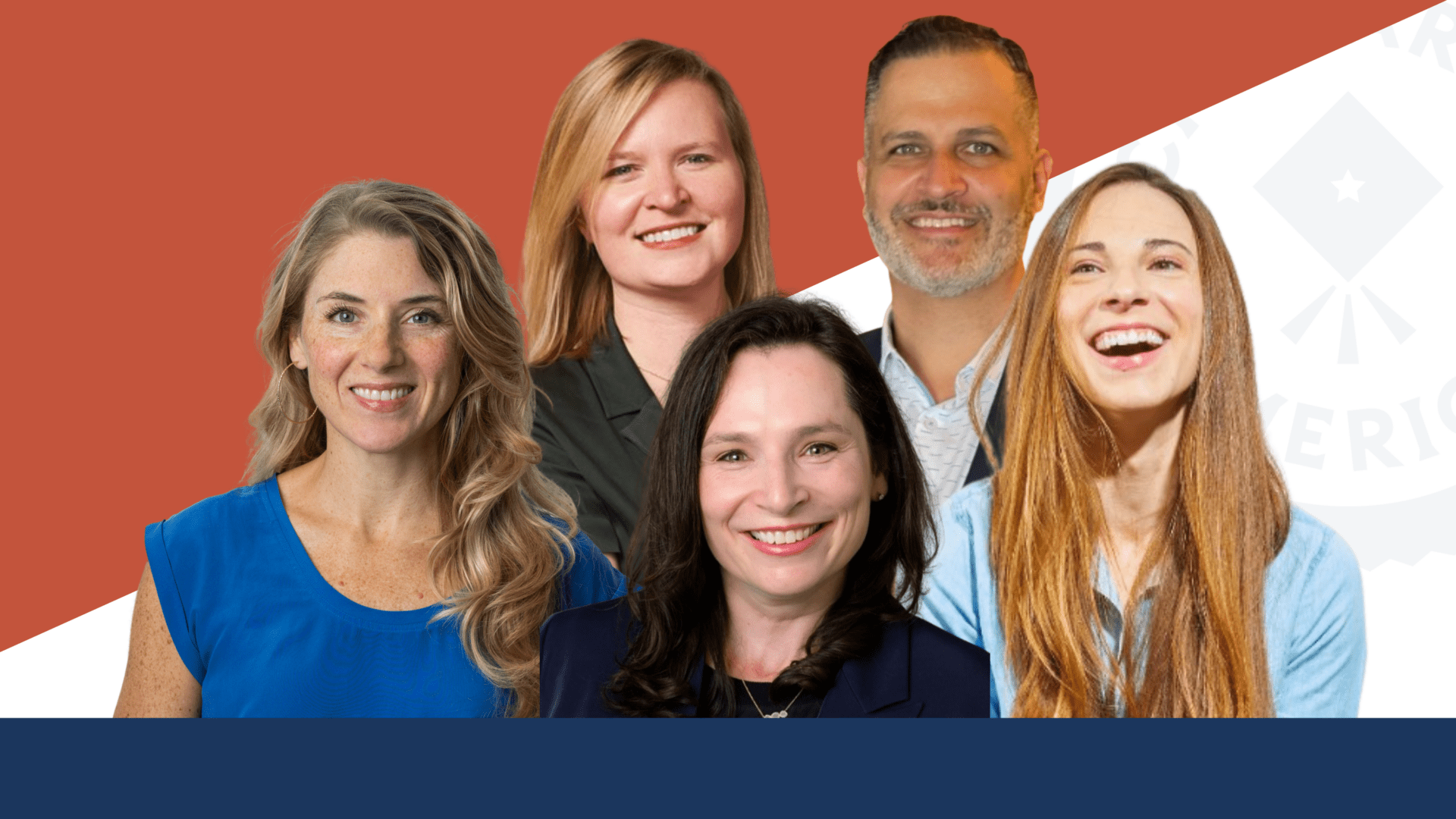
From compliance considerations to donor motivations, philanthropic leaders are rethinking how donor-advised funds can unlock sustainable scholarship support.
Filed In
A donor-advised fund (DAF) is a charitable giving account established at a public charity—such as a community foundation or national sponsor—that allows donors to make a tax-deductible contribution, invest the funds for potential growth, and recommend grants to nonprofits over time.
DAFs provide a flexible and tax-efficient way for individuals and families to manage their philanthropy, supporting causes like education, scholarships, emergency aid, and community initiatives while maintaining advisory privileges over how funds are distributed.
Donor-advised funds are one of the fastest-growing vehicles in American philanthropy. In this Partner Convening webinar, leaders from national DAF providers, community foundations, and philanthropic advisory organizations discuss how DAFs can be structured to support scholarships compliantly and effectively.
 Jenn Clark
Moderator
 Linda Shak
Panelist
 Fernando Gonzalez
Panelist
 Ashley Hezel
Panelist
 Madeline Tomseth
Panelist
Please note that the following transcript has been edited for clarity.
Matt Konrad:
Welcome, everyone, as you join us and get settled. My name is Matt Konrad. I’m the Senior Content Manager at Scholarship America, and it is my great pleasure to welcome you to our second Partner Convening webinar: Unlocking Individual Philanthropy for Scholarship Support, with a specific focus on donor-advised funds.
A lot of people don’t realize that donor-advised funds are a natural match for scholarship funding, despite some misconceptions — which we will clear up with our panel of experts today. In today’s session, we’re going to look at how DAFs and individual philanthropy can be leveraged to launch and support scholarship programs, cover administrative fees, and build strategic partnerships between funders and program administrators.
At Scholarship America, we receive quite a few DAF gifts. Since 2019, we’ve received more than 2,000 gifts — everything from $5 gifts to hundred-thousand-dollar gifts — through donor-advised funds.
Our panel today will discuss the growth of DAF scholarship support, as well as how we can work together to maximize the impact of individual donors. I want to start by thanking Imaginable Futures for their sponsorship of today’s webinar and welcome Jenn Clark, our moderator. Jenn is the lead of strategic communications for Imaginable Futures’ U.S. team. She will tell you a little more about their organization. They do amazing work, particularly in supporting college students who are also parents.
With that, I will turn things over to Jenn. If you’re attending, please make sure you are muted, and we’ll kick things off. Jenn, over to you.
Jenn Clark:
Thank you so much, Matt. Hi, everybody. I’m Jenn Clark, and although I’m moderating, I’m mostly here to learn from these four incredible DAF experts we’ve gathered today. They have deep insights into an area that’s reshaping philanthropic giving.
At Imaginable Futures, we support a range of efforts to improve the success of the one in five college students in the U.S. who are parents.
What does that have to do with donor-advised funds and scholarship support? Most student parents struggle to afford college and basic living expenses for their families while they go to school. They often slip through the cracks of institutional supports that exist to help other students — many of whom don’t have children — access college.
Scholarship America has been doing really great work to shine a light on the financial barriers today’s students are facing. We know that individual donors can be powerful partners in unlocking additional support to help more students get the education they need to thrive.
We have a real rockstar cast today.
Fernando Gonzalez leads development efforts at the National Philanthropic Trust, one of the largest providers of donor-advised funds globally. He works closely with donors, advisors, and nonprofit partners to expand philanthropic access and help individuals translate charitable intent into sustained impact.
Ashley Hezel oversees operational strategy at the Pittsburgh Community Foundation, supporting donors in creating and administering scholarship funds that reflect local priorities. Her work bridges donor vision, compliance, and community-centered impact, with a strong focus on student access and success.
Linda Shak is the Director of Philanthropic Strategies at Fidelity Charitable, where she partners with donors and advisors to design thoughtful giving strategies using donor-advised funds. With a background in social work, she brings a donor- and beneficiary-centered lens to philanthropy, including education, emergency aid, and systems-level change.
And last but not least, Madeline Thomseth is a Strategic Impact Partner at Niveau Philanthropy and an executive coach dedicated to dismantling barriers that limit opportunity. Drawing on experience from corporate family office leadership to entrepreneurial ventures, Madeline now serves as a coach, donor, volunteer, and consultant across the nonprofit and social enterprise sectors, committed to collaborative, community-driven approaches to lasting impact.
Given the four very different perspectives represented here, I want to start with a general question: What motivates individual donors — especially DAF holders — to invest in scholarships as part of their philanthropic strategy?
Madeline, I’m going to start with you, as I know you have a personal perspective on this.
Madeline Tomseth:
Thank you, Jenn. I think we’ve heard a lot of conversations about what it means to meet this moment. As a self-labeled next-gen philanthropist, I think it’s about getting creative with how to activate your philanthropic capital.
Many people aren’t always aware of how creative you can be with your DAF and how you choose to give — it’s not just “park and give.” For me, it was about thinking about a sense of place. My priorities as a donor are very individual and specific. I do a lot of my giving in Boulder County. Issues like food security and supporting local organizations are really important to me.
Having a close connection to Abigail at Scholarship America — triggered by the withholding of SNAP benefits — created an opportunity for partnership. I always seek partnership and ask: How can we meet this moment, serve immediate needs, and also move the needle toward systemic change?
It allowed me to focus on what I do best: bringing resources, values, and a focus on impact, while partnering with experts like Scholarship America to implement and coordinate support for students. A thousand dollars can often make the difference between graduation and dropping out.
For me, it’s about thinking creatively about what I care about, finding trusted partners, and creating the systems change we’re seeking as donors. It was a great alignment with Scholarship America.
Jenn Clark:
That’s amazing. And Linda, I want to go over to you because you work with a range of individual donors. From your vantage point, how are donors thinking about scholarships — or how should they be thinking about scholarships — as part of their charitable giving portfolio? And what themes are you seeing in terms of donor interest?
Linda Shak:
Yeah, it’s a great question. Although I’ve been working with donors and in philanthropy for a while at Fidelity Charitable, I feel like the new kid on the block when it comes to scholarships — or at least the new kid on the block on this panel — because it’s only been in the last year or two that I’ve had several donors approach me about scholarships.
The incredible thing I’ve noticed is that scholarships really tap into what’s personal for people — whether it’s experiences, opportunities, or the people who have touched their own lives. I’ve seen everything from a family whose now-grown children were first-generation college students and who wanted to give back and ensure other young people had access to education, to a family that wanted to give back to the employees at their company who had been with them for so long, ensuring those employees and their families had opportunities for higher education. I’ve also worked with a family touched by a specific illness who wanted to support others impacted by that illness.
I even had a donor whose dear friend passed away and who wanted to name a scholarship in that friend’s memory and ensure others could pursue a similar vocation.
So I think it really comes down to tapping into what’s personal for people. I encourage those of you working with donors — or those of you who are potential donors yourselves — to consider: Are there opportunities you’ve had or people who have touched your lives? And are there ways to give back and create impact for others in the future in honor of those experiences, opportunities, and people?
Jenn Clark:
That’s awesome. I’m definitely learning — I was writing down notes from what you were saying — and that really resonates with what we do at Imaginable Futures. We take a systems approach to education, but I’ve found that when we talk about education, it’s something most people have a universal experience with — yet it’s also deeply personal. What you were saying really resonates in terms of why education, and scholarships in particular, are such powerful connections for individual donors.
Fernando, I want to turn it over to you. From your vantage point at National Philanthropic Trust, do you have insight into the broader trends shaping DAF giving in general? And this is really a two-part question: How have you seen donors leverage DAF giving — particularly in how their charitable dollars are deployed over time — and, related to this conversation, how might that affect grants to organizations administering scholarship funds?
Fernando Gonzalez:
Sure, and I appreciate the conversation. We’ve talked about motivations, but donor behavior really comes into play when it comes to donor-advised funds (DAFs) and other charitable vehicles used to support scholarships and educational causes.
The donor-advised fund space has grown rapidly over the past decade. While DAFs have existed in the tax code since the 1930s, they really began gaining traction in the 1990s as an alternative to traditional foundation giving. When we look at the overall velocity of funds flowing into DAFs, that same velocity is generally maintained in the outflows as well.
If you’re familiar with the DAF Report, it’s something National Philanthropic Trust has published for many years. This year, that work transitioned to the DAF Research Collaborative, which we now fund to continue and expand the research.
What’s unique now is that while the DAF Report historically examined the broader DAF landscape, the DAF Research Collaborative is diving deeper into donor behavior. How are donors actually leveraging donor-advised funds? On the other side, researchers are also examining how charities cultivate these dollars.
To ground this in data, roughly 22% to 25% of DAF assets flow out annually. That doesn’t mean every individual account distributes at that rate, but it is the average across the industry.
What’s particularly interesting is how the DAF Research Collaborative categorizes donor behavior into what they call “tubs,” “tanks,” and “towers.” I don’t work for the Collaborative, but I frequently reference their data because it provides valuable insight into donor mindset:
Many donors use a combination of these approaches for different segments of their giving. They may proactively plan to support a scholarship program at their alma mater or contribute to their house of worship. At the same time, they retain flexibility to respond to reactive giving opportunities.
For example, I personally set aside about 20% of my DAF for reactive requests from friends, family, or my alma mater when they reach out each year.
What this underscores—particularly for fundraisers and scholarship administrators—is the importance of viewing DAF donors through both a planned giving and major gifts lens. DAFs effectively represent both: giving while living and giving as part of a longer-term legacy strategy.
In the scholarship funding arena, it becomes powerful to segment supporters into those who hold DAFs and those who do not. Donors with DAFs often have additional philanthropic capital available and may be positioned to support programs more significantly over time.
As we continue this conversation, I know Ashley—and likely all of us—will touch on practical considerations, including tips, traps, and common challenges in scholarship funding. But behaviorally speaking, the DAF sector is robust. Assets are flowing consistently and at scale, and there is meaningful opportunity to cultivate these relationships in ways that align with the scholarship programs you care about.
Jenn Clark:
That’s amazing. I already know I want to bookmark that report.
We’ve talked about what brings donors to the table for scholarship and DAF funding. Now let’s discuss the challenges and misconceptions—and how to address them.
Ashley, I’d love to bring you into the conversation. The Pittsburgh Foundation is one of the largest and oldest community foundations, operating under an endowed philanthropic model. How has your scholarship program evolved over time? What key challenges have emerged, and how have you addressed them?
And as our resident compliance expert, I’d love for you to weave in some of that wisdom as well.
Ashley Hezel:
Sure—thank you, Jenn. Hi, everyone.
For context, The Pittsburgh Foundation is over 80 years old. We steward about 2,800 permanently endowed funds, roughly 400 of which are scholarship funds. That’s a very robust scholarship program in the community foundation space.
Because we operate under an endowed model, these funds exist in perpetuity. That means we are still carrying out donor intent established in the 1940s today. As we all know, higher education has changed dramatically over that period—especially in the last 30 years.
Our core challenge has been this:
How do we honor donor intent while ensuring scholarships are truly impactful for today’s—and tomorrow’s—students?
Historically, we were a strong regional partner. Our model included a $25,000 fund minimum and allowed donors to participate directly in the review process. That worked well for many years. But over time, it became more difficult to sustain.
Some funds had criteria that no longer aligned with workforce realities. Many were single-year, $1,000 merit awards—generous, but not necessarily transformative. Managing hundreds of customized funds also became increasingly complex and costly, especially as legislative changes limited donor involvement.
About ten years ago, we moved our applications online. That improved student access and strengthened confidentiality and compliance safeguards.
But that led to a larger question: improving process is important—but are we maximizing impact?
We assembled a cross-departmental team to investigate. The data was clear. Students with the greatest financial need were often receiving the least scholarship support. Meanwhile, high-performing students were frequently already receiving substantial institutional aid. We also learned that relatively small financial gaps often determine whether a student persists or leaves higher education.
So we evolved.
We increased our fund minimums:
We required multi-year awards. As a result, new funds now provide awards starting at $10,000 over four years and prioritize financial need, typically with only one or two additional criteria.
We also created pathways to amend older funds and modernize committee structures. Increasingly, we recommend donor-advised funds as a flexible instrument for scholarship support.
Additionally, we partnered with Scholarship America. Initially, this helped relieve administrative pressure—but it has become much more. In the past four years, our applicants have secured more than 600 additional scholarships totaling nearly $7 million from other providers. That has nearly quadrupled their opportunities and significantly reduced student debt.
I often say this leveraged partnership is like the difference between shopping at a local department store versus the Mall of America—access changes outcomes.
The hardest part of this evolution hasn’t been structural. It’s been relational. Scholarship donors care deeply. Many have personal stories behind their funds and long-held expectations.
Our role is to navigate those relationships with empathy. Our donor services team starts by listening:
Why did you create this scholarship? Who were you hoping to impact?
From there, we work toward solutions with donors—not for them. We share clear data about costs, unmet need, and compliance requirements. We acknowledge that change can feel significant. Sometimes it takes several conversations. We’ve learned that going slow allows us to move faster toward durable solutions.
Strong cross-departmental alignment has made this possible. We are aligned around honoring donor intent, ensuring compliance, maximizing student impact, and educating donors. Because we are aligned internally, we can show up consistently and confidently.
Ultimately, our evolution has been about moving from stewarding scholarships in perpetuity to stewarding opportunity in perpetuity—not just ensuring funds last forever, but ensuring their impact does.
From a compliance perspective, the key point is this: donors can absolutely recommend grants from their DAFs, as long as those dollars are not earmarked for a specific individual and the donor is not involved in the selection process. Scholarship funds that award directly to individuals involve additional rules and oversight, particularly if donors are involved in the process.
I’m happy to go deeper into compliance or structure if helpful.
Fernando Gonzalez:
Jenn, do you mind if I jump in? This comes up a lot, and I think we can all agree that first and foremost, not every DAF provider is like The Pittsburgh Foundation. The Pittsburgh Foundation has scholarship funds and programs, as many community foundations do. Many of the national DAF sponsors, however, do not administer scholarship programs themselves. That doesn’t mean they aren’t funding scholarships through community foundations, Scholarship America, or others.
One thing that’s always worth pointing out is that when donors give from a DAF to a scholarship program, they relinquish control over the funds at the front end. They then recommend grants to the scholarship fund or the nonprofit administering that particular program.
It’s helpful to frame this properly for donors. The grants are made to support scholarship programs and may be approved as long as the donor, DAF advisors, and any related parties do not control the selection process. As Ashley mentioned, one thing I try to emphasize is that the selection committee really matters in this process. For example, if a committee has five people, one of whom is the donor and four who are unrelated to the donor, that can work. But if four of the five members are family members, that majority family involvement is what the IRS will scrutinize as part of the grant review. I just wanted to make that point.
Ashley Hezel:
And you’re talking about a scholarship fund in this case, right, Fernando? Not the DAF itself? Oh yeah, scholarships. There are so many rules. I have pages and pages of IRS guidance. I don’t think we have enough time to go through all of that.
Fernando Gonzalez:
Yes, absolutely. But it’s important to be sure we’re all aligned going into these conversations. When a DAF is funding a scholarship program, there are many checks and balances to ensure the grant is permissible from an IRS standpoint. Everyone wants to maintain the charitable status of the DAF sponsor and protect the donor’s tax deduction on the front end as well.
Jenn Clark:
You’re already heading in this direction, Fernando, so I’m going to segue us there — misconceptions, traps, and the things that might prevent people from pursuing a DAF–scholarship relationship. Linda, I know you have some thoughts to add, and Madeline, I’m sure you can speak from your experience as well. What misconceptions are donors bringing to this?
Linda Shak:
Ashley and Fernando gave a great preview of this, but I would say the number one misconception is that unless a donor works directly with a university or school, they cannot use their DAF funds for a broader community scholarship. Part of our role as DAF providers — and the role of nonprofits like Scholarship America and community foundations that administer scholarships — along with philanthropic advisors, is to do some myth-busting.
There is absolutely an opportunity to recommend a grant from your donor-advised fund to an intermediary organization that can administer the scholarship on your behalf. There’s real opportunity there.
Another important area, which Fernando and Ashley touched on, isn’t necessarily a misconception but rather an educational point: donors need to understand that there are guardrails in place. They may not be able to handpick scholarship recipients. That can sometimes be difficult to hear. However, they can set the criteria that an independent review panel will use to select recipients.
These guardrails exist because of IRS regulations, but also because we want the process to be fair and equitable. Anyone who takes the time to apply should have a fair shot, and that’s why these structures are in place.
Madeline Tomseth:
I can weigh in a bit. Absolutely — I don’t think this is an either/or situation. It’s a yes-and.
For me, it was a case of not knowing what I didn’t know. It’s the role of advisors and community partners — like Scholarship America — to help figure out what’s possible. I always go back to the question: What’s most important to you as a donor, and what impact are you seeking?
Yes, I gave up some control over where the scholarships went. But my goal was impact in our community and providing fast, flexible emergency funding to students. So I return to that question of why you’re giving and how you’re activating and trusting your partners. That trust is such an important piece.
I also think it’s important to educate other donors. I didn’t even know this option existed until I met Scholarship America. I thought scholarships had to go through a university or through my operating company, which is what we had done previously.
For me, it was very easy to partner with Scholarship America. I shared my priorities and acknowledged that I am not a scholarship administrator. I’m not the expert. So I trusted them. We co-created the program and were able to get funding out to the community quickly — which was my motivation.
We needed fast funding for students who had lost SNAP benefits and were in that critical moment of deciding whether to buy groceries or make it to class. So again, it comes back to partnership. Don’t reinvent the wheel. Find people you trust, build your advisory team, and always return to the impact you’re seeking.
Jenn Clark:
Amazing. Yeah, Ashley, I love something you said — I wrote it down — that it’s not about the funds lasting into perpetuity, but about the impact lasting into perpetuity. I think that shift is just so crucial and important.
We received a few Q&A questions when people registered, so we have a sense of what those coming to the conversation are interested in hearing more about. Some of them relate to what you said earlier, Fernando, which was really about how charities are cultivating these dollars.
With DAF donors, we sort of have the ecosystem: the donors, the advisors, the folks administering these funds, and then the organizations trying to secure those dollars. Maybe you can speak a little more about how that other side of the equation factors into this conversation.
Fernando Gonzalez:
It’s a very common question, most certainly. I think when many people start looking at the DAF industry, they think, “Okay, I see that over there — how do I get over there and access some of those funds to support the causes I care about?”
The very simple answer is: these are the same donors you are already cultivating — the same people who are looking to make an impact in their local communities. If you view the DAF as simply the vehicle through which they’re giving, it turns the mirror back on your existing fundraising strategy. This is the same fundraising effort you’ve had in the past, just with some differences.
For example, when you receive support from a donor-advised fund holder, that signals 100% of the time that they have more in their DAF. The average DAF size, the last time we looked, was about $75,000–$80,000. That’s the average across thousands and thousands of DAFs.
So when you receive a $500 grant from a donor-advised fund, finding a way to cultivate more from that donor — whether that becomes an annual recurring gift from the DAF, or perhaps naming a scholarship fund or making your university a charitable beneficiary upon the donor’s passing — is where major gift and planned giving tactics come into play for assets currently held in donor-advised funds.
Another piece we find very helpful for organizations actively fundraising — for scholarships or other efforts — is signaling on your website and in appeals that donor-advised funds are a simple way to give. Include your tax ID number if appropriate. Provide specific language like, “Recommend your grant from your donor-advised fund.” You can even suggest setting up a recurring grant from a donor-advised fund.
It’s really about walking that messaging forward a few steps. That goes a long way. It really does.
Jenn Clark:
That’s awesome. I know this was a question that came up frequently during pre-registration. Ashley, Linda, Madeline — do you have any additional thoughts about the other side of the funding scenario? Any advice for folks who are trying to cultivate donor-advised funds or connect with advisors?
What kind of advice would you give? I see Ashley thinking, so maybe I’ll start with Linda.
Linda Shak:
Yeah, I don’t know if I have anything additional to add beyond what Fernando said. He raised some really important points here. So I’ll pass it to my colleagues in case they have anything to share.
Madeline Tomseth:
Actually — and I don’t want to take this from you — but from a donor perspective, it starts with the connection, not the ask. Because things are so personalized, it’s about understanding what people care about and, knowing they have a DAF, how you might activate that based on their interests and values.
Lead with that. With donors, it’s all about the connection and the story — we’ve heard a lot about that today. But execution also matters: understanding the possibilities for activating philanthropic capital to achieve the results and impact you want to see in your communities.
So that’s my little addition.
Jenn Clark:
That’s awesome. I’m also going to take my moderator’s privilege to ask a question I’m very interested in. It’s been percolating throughout the conversation: changing trends in donor expectations around impact and what may be affecting donor behavior.
Linda, you mentioned that in the last year more people have been coming to you asking about scholarships. Ashley, you mentioned legislative changes that may be shaping donor behavior.
I’m curious — from your perspectives over the last few years, how have donor expectations or donor behavior changed? And what do you think is driving those changes?
Linda, I’ll start with you.
Linda Shak:
Yeah, so I think this is all anecdotal for me — I don’t really have hard evidence of this — but one thing I think about is that we’re at a time when there’s just so much need in the world. I think people are searching for ways to respond to that. Donors feel overwhelmed and want to figure out how they can truly have an impact.
I think scholarships provide that opportunity to really see where those dollars are making a difference in people’s lives. A few months ago, I sat down for lunch with one of the families I worked with on a scholarship program. They felt so proud and excited to share that one of the students they funded was now going to pursue a degree in pre-med, another was interested in nursing, and someone else wanted to go into the accounting field.
I could just see their eyes light up. And honestly, as a philanthropic advisor, it made me light up too — to see how one relatively small scholarship (it wasn’t even the largest award) could be so meaningful for each of those students. I think that’s really the opportunity donors are seeking right now — the chance to have tangible impact.
Jenn Clark:
That must have been wonderful to hear and such a great boost. Ashley, I want to turn it back over to you because there have been some changes in how people can navigate this landscape.
Ashley Hezel:
Yeah, I think the biggest legislative change I was referring to is the Pension Protection Act of 2006. That’s almost 20 years ago at this point, but it takes time for large organizations like ours to catch up and update processes and policies.
That legislation is what put many of these guardrails in place. It started “slapping the hands” of well-meaning donors who wanted to give out scholarship dollars but weren’t following the new rules. As a result, we’ve had to tighten up how scholarship funds operate. I think everyone else has had to do the same — what you used to be able to do, you simply can’t do anymore.
When donors come to us, we’ve always been able to offer multiple options. Like Fernanda said, we can offer a scholarship fund, we can offer a donor-advised fund (DAF), and we can offer a variety of other fund types.
In the past, if someone came in leading with “scholarship,” we would immediately head down that path. Now we don’t do that. We start by asking, “What impact do you want to have? What do you want to see happen?” Often, a donor-advised fund is a better solution, largely because of the restrictions around scholarships. Those restrictions can make scholarship funds costly, clunky, and difficult to sustain long-term.
We’ve certainly put improvements in place, but nothing is as flexible as a donor-advised fund. That’s what we’ve seen over the last five to ten years. Donors are still just as interested — we’re simply talking about different tools now.
Jenn Clark:
That’s an interesting reframing — that for most donors it’s really about the impact they want to see, not necessarily the structure itself.
Ashley Hezel:
I think donors often come in believing the structure is important. But when you start talking about impact — and what’s required to achieve that impact within a certain structure — sometimes that structure loses a bit of its luster. Sometimes it doesn’t. It really depends on the donor.
Fernando Gonzalez:
This has definitely gotten my gears turning as well. I think there are significant generational differences in giving behaviors. Younger generations often know the impact they want to have and want to implement it in the most efficient way possible. They want it to happen — simply and effectively.
That can often be done by leveraging organizations like Scholarship America and pairing that with a donor-advised fund as a funding overlay, possibly alongside others who share the same goals.
If we think back to those who traditionally defaulted to private foundations, that was the standard mid-century approach. Even if later generations are no longer directly involved, they may inherit those foundations. Many of those future generations have wound those down into donor-advised funds to create efficiencies.
As Ashley mentioned, DAFs are more nimble and more cost-effective. They can be implemented in a grant-making fashion that aligns with today’s expectations around efficiency and measurable impact.
When we appeal to donors, the message has to be tailored generationally. Some donors want to measure impact immediately. Others care deeply about long-term impact and sustainability. The mission, vision, and values are always part of the conversation — but the execution differs. Speaking directly to how they’ll execute their vision, and appealing to that from the outset, is incredibly helpful.
Jenn Clark:
I feel like we need a part two on generational differences in giving — that would be fascinating.
In our last five minutes, let’s do a quick round robin. I’d love for each of you to share your top piece of advice for donors — or those working with donors — who want to create meaningful, student-centered impact without creating administrative burden. Ashley, we’ll start with you, then Fernando, Linda, and we’ll close where we started with Madeline.
Ashley Hezel:
I’d say start with the student experience. Ask yourself — or ask your client — “Will this requirement make it easier or harder for a student to access support?”
Simple eligibility criteria, flexible dollars, and fewer documentation hurdles dramatically increase impact.
And if you want to minimize administrative lift and cost, work through existing scholarship infrastructure or flexible vehicles like donor-advised funds rather than building something highly customized from scratch.
Fernando Gonzalez:
I’ll jump in. As a first-generation high school graduate and first-generation college student, scholarships are very near and dear to me and to my professional path. So I’m grateful to be part of this conversation.
My advice is simple: ask lots of questions. Those working in scholarships should ask lots of questions. Those establishing funds should ask lots of questions. Encourage donors to ask the right questions.
The more educated someone becomes on the topic, the less tension they feel about needing to control every step along the way. Helpers are out there — we’re on this call, and there are many others. We’re ready to educate and to walk alongside you in bringing these dollars to the causes people care about — today, giving while living, and in the future. There’s a long road ahead, and we want to ensure we’re funding opportunity for generations to come.
Linda Shak:
For donors who already have a donor-advised fund and are interested in scholarships, I’d encourage you to check in with your DAF sponsor — whether it’s one of us here on the panel or another sponsor — to learn how they’ve partnered with scholarship nonprofits in the past. There are ways to do this, and many people are successfully using DAFs to fund scholarships.
Then, engage a nonprofit scholarship administrator. Echoing Fernando: ask lots of questions. Organizations in this space have worked with individual donors, corporations, and foundations to administer scholarships. They understand the pitfalls and what makes a scholarship successful. Learn from their experience.
And just a shout-out — Scholarship America, through its Partner Convening and the work they’ve done, has been a fantastic partner with great advice, as have others in this space. Engage these nonprofits and learn from the important work they’re doing.
Jenn Clark:
Amazing. Bring us home, Madeline.
Madeline Tomseth:
Yeah, I’m going to echo a lot of what everyone has said here. Again, it goes back to leading with impact. Get really clear on the impact you want to have with your giving and your values. Then partner — don’t build. Really take the time to find places like Scholarship America, partner with NPT, with your DAF holders, with your foundations, and figure out how to execute this.
As donors, we don’t have to be the experts on everything. Lean on the experts to create the impact so you can focus on deploying resources and doing the work you want to do as a donor. I think it’s about leaning into that, and then remembering you can always customize your involvement. There are so many options. Get creative with what you can do with your DAF.
Jenn Clark:
You sort of teed me up, because I think this idea of partnering, not building, is so crucial — and we see that in institutional philanthropy as well. Linda, what you said earlier — I just forgot the exact phrasing, but it was brilliant — really speaks to making sure you don’t feel like you’re alone.
There are people out there with experience. Scholarship America has been a great partner to us on the institutional philanthropy side. There are folks who understand both sides of the conversation and can offer helpful guidance to people who are looking to make an impact.
Fernando Gonzalez:
And that Pittsburgh native, Mr. Rogers, once said, “Find the helpers,” because we’re out here, for sure. And that was a hat tip to you, Ashley.
Matt Konrad:
Thank you very much, Jenn, and all of our panelists for a great conversation. I know we’ve just scratched the surface of this issue — there’s so much more to discuss.
Thank you again to Imaginable Futures for sponsoring this webinar, and our appreciation to everyone on the panel and everyone who attended.
Yes. Donor-advised funds (DAFs) can be used to support scholarship programs when the grant is made to a qualified public charity — such as a community foundation, university, or nonprofit scholarship administrator — that manages the scholarship. The charity must retain full discretion over the funds and oversee the selection process to ensure compliance with IRS rules.
DAF grants must go to a qualified public charity and cannot be earmarked for a specific individual. Donors, DAF advisors, and related parties may not control the selection of scholarship recipients or receive prohibited benefits. Scholarship programs typically use independent selection committees and documented criteria to meet IRS requirements and maintain charitable compliance. Please note that Scholarship America does not provide tax advice and recommends speaking with a tax expert.
No. Donors and related parties cannot select individual scholarship recipients when funding through a donor-advised fund. However, donors may help define broad eligibility criteria — such as geographic region, field of study, financial need, or career pathway — while an independent committee makes final award decisions.
A donor-advised fund is a charitable giving account that allows donors to recommend grants to qualified nonprofits over time. A scholarship fund is a charitable program that awards funds directly to students and is subject to additional IRS oversight and compliance requirements. Many donors use DAFs to fund scholarships administered by a nonprofit or community foundation.
Tell us about your philanthropic goals, and we’ll help you explore compliant, high-impact scholarship options. Submit the form below to start the conversation.



Our team is here to help you achieve your goals and build your custom scholarship program.