The Future of DAF-Funded Scholarships: Perspectives from Philanthropy Thought Leaders (Webinar + Transcript)
The Future of DAF-Funded Scholarships: Perspectives from Philanthropy Thought Leaders (Webinar + Transcript) From compliance…
Filed In
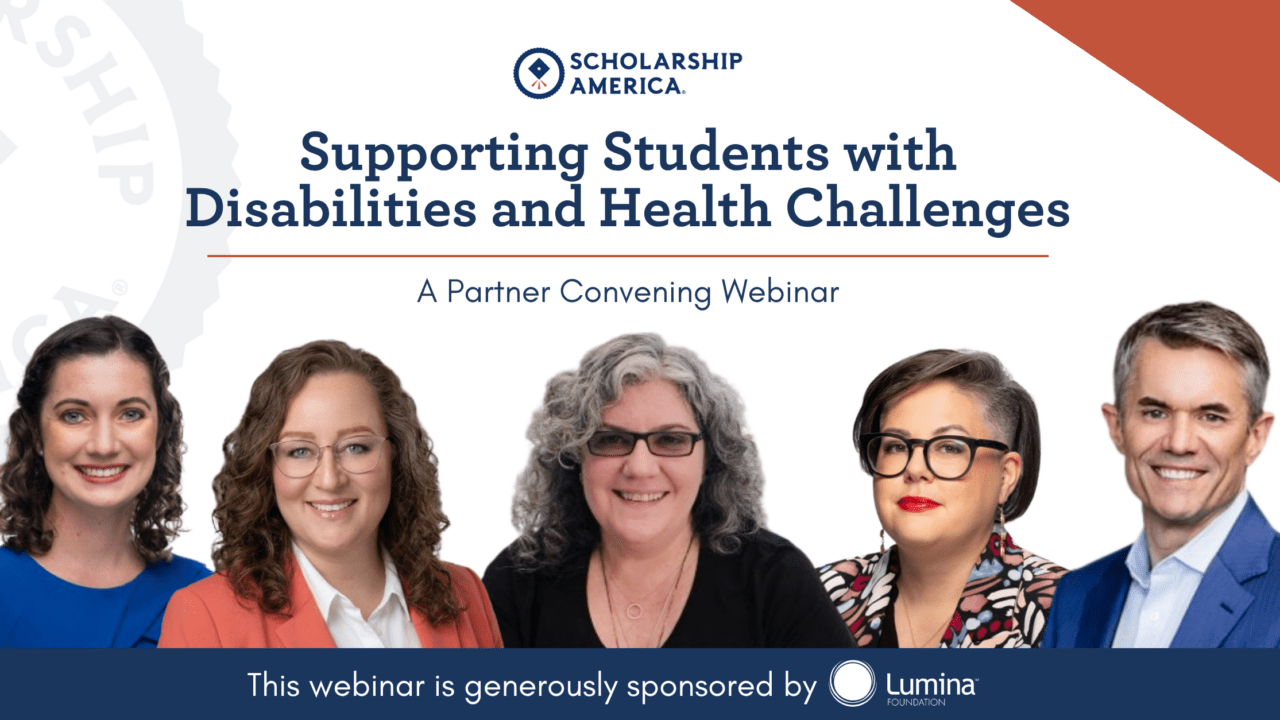
This Scholarship America webinar, sponsored by Lumina Foundation, brings together organizations on the front lines of the skilled trades workforce crisis.
Abigail Seldin, Chief Growth Officer at Scholarship America, opens by framing the urgency: more than a million trade jobs sit unfilled, and the pipeline is leaking, with completion rates at or below 50% and financial hardship as the top reason students drop out.
Panelists share how their programs were built, what they’ve learned, and what it actually takes to design scholarships that move non-traditional learners from training into long-term, wealth-creating careers in the trades.

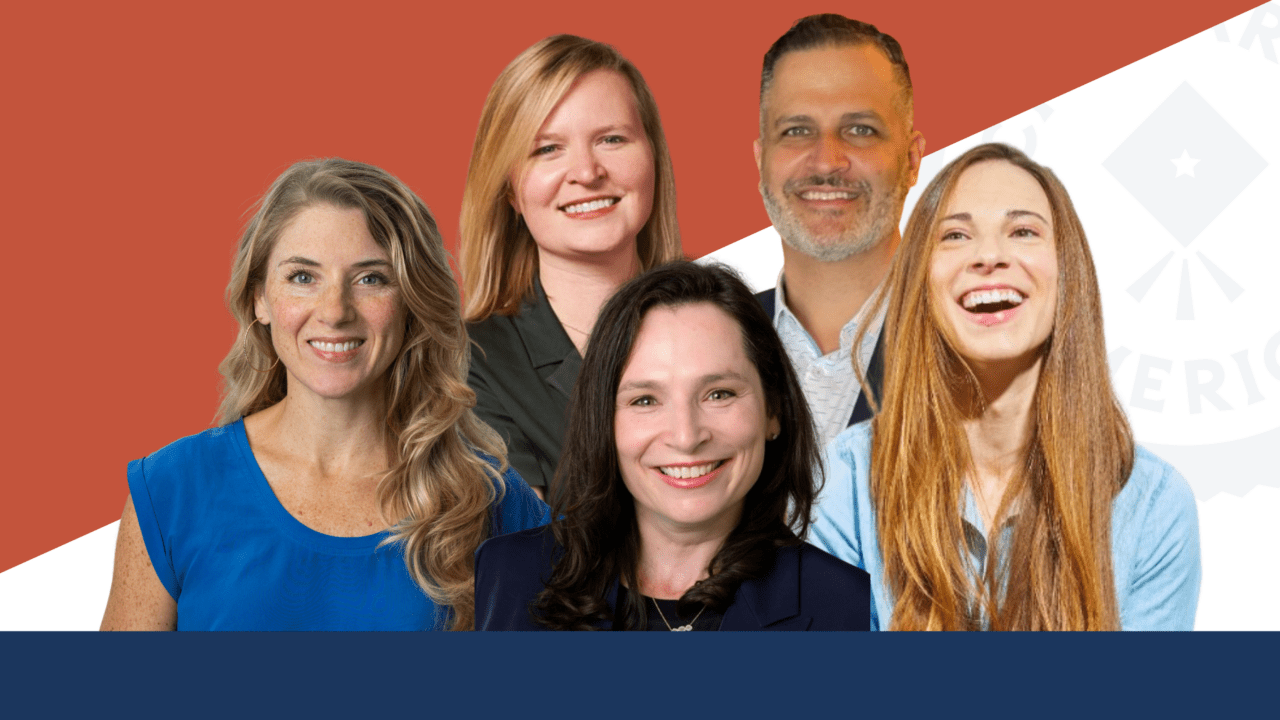
Katy Launius
Strategy Officer for Student Success
Works to remedy structural disparities and foster equitable outcomes for Black, Latino, and Indigenous adult students.
Works to remedy structural disparities and foster equitable outcomes for Black, Latino, and Indigenous adult students.

Casey Welch
Vice President, Career
Strengthening pathways between education and employment through credentialing and skills-based models.
Strengthening pathways between education and employment through credentialing and skills-based models.

Verena Kwan
Corporate Philanthropy Advisor
Focused on education, workforce development, and equitable access to career pathways across regional talent pipelines.
Focused on education, workforce development, and equitable access to career pathways across regional talent pipelines.

Nicole McVaugh
Director, IN2WORK
Delivers culinary and hospitality training in correctional facilities to prepare participants for employment upon reentry.
Delivers culinary and hospitality training in correctional facilities to prepare participants for employment upon reentry.

Tony Zerante
Chief Strategy Officer
Guides programs supporting federal employees with expertise in benefit design, member engagement, and scholarship investments.
Guides programs supporting federal employees with expertise in benefit design, member engagement, and scholarship investments.

Susan Jackson
Business Development
Connecting industry needs with skilled talent by bridging employers, training providers, and emerging trade professionals.
Connecting industry needs with skilled talent by bridging employers, training providers, and emerging trade professionals.
Please note that the following transcript has been edited for clarity.
Abigail Seldin
Good afternoon, and thank you for joining us today. I’m Abigail Seldin, Chief Growth Officer at Scholarship America. Each year, we award more than $300 million through 1,300 unique scholarship programs, running these on behalf of half of today’s Fortune 500 companies, federal agencies, local governments, foundations, and individual philanthropists.
Last year, as part of that work, we awarded nearly $20 million in scholarships to 10,000 students in trade and technical schools. And that number tells us something really important: scholarships for students in the trades are not a small, experimental, or even new piece of American philanthropy or workforce investment. They are a core part of how sponsors are already showing up for students every day.
But we need to do more, and faster. More than a million trade jobs sit unfilled today, and every employer who depends on skilled trades is feeling that strain. The pipeline is leaking. Completion rates for trade schools, apprenticeships, and community colleges all hover at or below 50% in aggregate. The number one reason students drop out isn’t a lack of interest, passion, or commitment — it’s personal financial hardship. Most students are just one flat tire away from walking away from their training for good.
The question on the table today is: how do we show an aspiring electrician, welder, HVAC tech, or plumber that they are scholarship material? How do we ensure scholarships are designed to help them succeed? Our panelists are going to share what’s working in the programs they’ve been leading for quite some time — before this was cool, before it was on the cover of the Wall Street Journal every other day.
Casey Welch
We’re in a really unique moment: a million trade jobs unfilled, while millions of learners are still searching for direction and opportunity. The gap isn’t just skills — it’s awareness, access, and perception. Pearson recently surveyed over 14,000 students and asked what’s standing in the way of their careers. The top barriers were direction, confidence, connections to opportunities, and — number one — cost of education. What’s powerful is that industry-aligned scholarships have the potential to address all four of those barriers, if designed the right way. Today, we’re going to unpack how these distinguished pioneers are moving from good intentions to real pathways, and how we can ensure more learners truly see themselves as scholarship material.
Casey Welch
Susan, when did the skills gap become very real for your organization, and what risks do you see if we don’t address the growing knowledge cliff fast enough?
Susan Jackson
For us, it started to feel very real when both workforce demand and retirements began accelerating at the same pace. Our workforce is retiring far faster than we can replace them. More than 1 in 5 construction workers is over the age of 55, and for every one person entering the field, as many as five are leaving. But demand for skilled labor is not slowing down — especially with the build-out of data centers and semiconductor facilities, and as the petrochemical industry expands into clean energy projects like carbon capture, blue hydrogen, and advanced recycling.
What makes this really alarming is the ripple effect when those roles go unfilled. It doesn’t just slow down one part of a project — it impacts safety, productivity, schedules, and ultimately cost. Projects get delayed, costs go up, and innovation slows. And that doesn’t just affect my industry. The consumer ends up feeling it, whether through higher prices, slower delivery on critical infrastructure, or delays in technologies we all depend on.
Verena Kwan
We’re seeing the same in the line work industry. The BLS projects demand for line workers to grow by nearly 9% by 2028. It’s an industry being hit simultaneously by retirements and increased demand driven by grid modernization, electrification, wildfire resilience, and renewable energy builds.
Casey Welch
This urgency is across every sector. When you look at retirement population trends and birth rates not at replacement levels, this isn’t going away. We’ve found ways to get by, but going forward, this will continue to be a major focus.
Casey Welch
Scholarships have traditionally been tied to four-year college. What had to change internally or culturally for your organization to say that trade pathways deserve this level of investment?
Tony Zerante
We’ve been partners with Scholarship America since we launched our program a little more than 20 years ago, and to be honest, we initially launched only four-year degree scholarships. We quickly pivoted based on two things. First, it was a direct ask from the membership organizations we serve — they came back and said, do you offer trade or two-year vo-tech scholarships? Our board looked at it and said, we don’t, and is there any reason we shouldn’t? The answer was no. We launched trade school scholarships 15 years ago, and we’ve gradually expanded the number every year since, meeting students where they want to be. Many students prefer a four-year degree, but not all of them do, and the need for these positions is only accelerating.
Casey Welch
A lot of trade students don’t naturally see themselves as scholarship candidates. What have you done in your eligibility criteria or outreach to change that mindset?
Nicole McVaugh
At Aramark IN2WORK, we’ve become much more intentional about shifting away from traditional academic criteria. Instead, we focus on the effort, growth, and commitment our students and graduates have demonstrated — including while incarcerated. We frame the scholarship as something participants have earned, not something out of reach because of their background. Most of our students are adult learners who haven’t been in a classroom for some time, but many have a job lead in HVAC or as an electrician. Through consistent encouragement and hands-on support from our workforce development team, we’ve helped them see themselves as deserving and capable of taking that next step. The goal is to shift their mindset from “this isn’t for me” to “this is a resource I can use to design my success.”
Casey Welch
Have you seen students’ confidence grow when you reach out to them about these opportunities?
Tony Zerante
Absolutely. The feedback we get from students, both four-year and two-year, is remarkable. We hear things like: “Thanks to your scholarship, I got my welder certification, and I’m now working a six-figure job at 22 years old in an industry where I feel valued and respected.” That kind of feedback reinforces that we’re doing the right thing, and it motivates us to keep expanding the program.
Verena Kwan
I’ve seen firsthand how life-changing these scholarships are. For the Edison International Lineworker Scholarship, we’re just wrapping up our sixth application cohort, and this year we’ve far surpassed previous years in both interest and applications — and I think that says something in itself. In terms of outreach and program design, we think carefully about partnerships. We work with the Brotherhood Crusade for case management and community outreach, LA Trade Tech as our education partner, and IBEW Local 47. A lot of the students who apply tell us they didn’t even know line work was a career until they saw someone in their community restoring power after an outage. That awareness piece is crucial.
Casey Welch
Where have partnerships — with employers, apprenticeships, or credential programs — made the biggest difference in moving learners to real opportunities? And how are you ensuring alignment between education and industry so students aren’t just trained, but truly workforce-ready?
Susan Jackson
We’re still relatively new — we launched this scholarship last year and have impacted 28 students so far. But the next step for us is getting all of our partnering companies involved in internship and mentorship programs. The connection between education and industry is what makes a program truly meaningful. Without it, you risk supporting education without creating an actual pathway. Scholarships open the door, but partnerships are where the opportunity becomes a career.
Verena Kwan
Line work is a very physically demanding trade — working at heights, in all outdoor conditions, often in extreme heat in Southern California. Something we’ve worked carefully on with Scholarship America is designing the application process to reach people who have the right interests and physical readiness for that kind of work. LA Trade Tech recently added a PE requirement for the program, and we share all physical requirements upfront with every applicant. We also partner with WINTER — Women in Non-Traditional Employment Roles — to encourage more women to apply, and we make sure they understand the requirements and know they can meet them.
Casey Welch
The ‘ships’ matter — partnerships, scholarships, internships, apprenticeships. They all work together to bridge the gap from education to work, and you can’t just do one.
Casey Welch
What metrics actually tell you this is working — whether that’s retention, wage growth, credential completion, or something else? How are you thinking about ROI, not just for your organization, but for the learner?
Susan Jackson
For the student, it’s straightforward: reduced financial burden, faster entry into the workforce, and stronger earning potential on the back end. For organizations like mine, it’s about talent pipeline stability — reducing hiring gaps, improving retention, and shortening the time to productivity. The cost of not investing in these students is much, much higher.
Nicole McVaugh
For us at Aramark IN2WORK, it’s on the people side. Education and employment are two of the major factors that reduce recidivism. Our ROI is really our mission: to empower the graduates of our program as they return home, so they can support themselves, support their families, and be active members of their community.
Tony Zerante
Our ROI is simple: are all of our scholarships being utilized every year? The answer is yes, consistently. And secondarily, is this directly supporting our mission? We’ve been around for 83 years, and our mission is to promote the health, welfare, and financial well-being of our members. These scholarships help their children take that next bold step, which speaks directly to that mission.
Verena Kwan
For the Edison International Lineworker Scholarship, we think about impact across three dimensions. First, access — are we reaching the right people who might not otherwise see themselves in this pathway? Second, completion — are students getting through the milestones? Passing the physical agility test, earning their Class A license, staying on track? We also pay attention to where students are struggling, because that tells us where support is missing. Third, employment outcomes — are students meeting pre-employment requirements, getting placed into entry-level roles, and then progressing through the apprenticeship-to-journeyman pathway into long-term careers? For many of our learners, it’s a real wage growth story: moving from low-wage work into a credentialed career with a much stronger earnings path. Many are supporting themselves and their families. That difference is very real.
Casey Welch
Where are we still unintentionally missing talent when it comes to career readiness, and what are you doing to ensure these opportunities reach those learners?
Nicole McVaugh
People who are currently or previously incarcerated represent a truly untapped talent pipeline for the skilled trades. Where we’re missing it is among individuals who don’t look job-ready on paper, but who have the drive and the potential. At Aramark IN2WORK, we’re bringing the training, mentorship, and apprenticeship into the facilities while people are still incarcerated, so they can use those credentials post-release. We focus on mindset change, skills development, and certifications — so that access isn’t the barrier when they come home. The scholarship then helps reduce the financial barrier. These are our neighbors, they are part of our community, and supporting their re-entry through the trades and vocational training is one meaningful way we can help.
Susan Jackson
In core construction trades, women make up about 4% of the workforce. One of the primary goals of the ECC Scholarship Fund is to award more scholarships to women. In our first year, 18% of our recipients were female, and the goal is for that number to keep rising. But the messaging matters enormously. These careers can’t be positioned as a backup path — especially not for young women. They have to be presented as high-opportunity, high-skill professions where women are needed and welcomed.
Tony Zerante
For our organization, it’s about making sure both the number and the value of our awards are meaningful. If the need calls for tripling the number of our vo-tech and trade school scholarships, then we need to figure out how to do that. That’s where we can help prevent missing talent — not by targeting a specific outcome, but by making sure our awards are substantial enough that it’s worth it for students to apply and run with it.
Verena Kwan
When we designed the Lineworker Scholarship, we really thought about what would actually help learners achieve success. The scholarship is up to $25,000 and covers not just tuition and tools, but also the Class A driver’s license and supportive services including transportation, childcare, and groceries. A lot of our students, when they get into the pole-climbing certificate program — which is very time-intensive and physically demanding — end up having to quit their jobs or switch to part-time. We think about all of that in how we design the scholarship.
Casey Welch
What perceptions or messaging have you seen that really hits the nail on the head? And what hasn’t worked?
Susan Jackson
I talk to a lot of middle schoolers and high school students about a path into the skilled trades, and I highlight these careers as high-skill, high-impact, and financially strong. But what packs the most punch is success stories. I show them the truck and the boat that someone bought as a welder. When students can see someone who looks like them succeeding, that’s when it becomes real. Representation in the storytelling is everything.
Casey Welch
Education has always been a promise of a better life, and the supply-and-demand shift has flipped the earnings picture on its head. It’s not just one path that leads to a great career and financial security anymore. One thing we’ve learned in working with our Connections Academy schools is that you have to get the message to the learner, the parent, and the educator — and you may need to frame it slightly differently for each. But if all three are aligned, the impact multiplies.
Casey Welch
Fast forward five years. What would have to be true to say we’ve actually started to solve the skills gap?
Susan Jackson
In our first year alone, we received 1,800 applications. To me, that screams that the desire is out there — people want these careers. They just need opportunities and a pathway. Five years from now, success looks like expanding those pathways, raising more money every year, and bringing more women into the trades.
Nicole McVaugh
For us, it’s about the full arc from job to career. There’s a first job, a better job, and then a career. How do these scholarships and a focus on the trades help someone who’s getting a job for the first time — or for the first time in a long time — build it into a long-term career? Success is students who received scholarships staying in their trades and growing, so their long-term success becomes the story.
Verena Kwan
Skilled trades being seen as first-choice careers. Learners having clear, supported pathways from training to long-term employment. And once they’re employed, having the mentorship and ongoing support to progress in their roles over time.
Tony Zerante
At the macro level, success is not hearing news stories about not being able to improve our highway system because there aren’t enough skilled workers. Not hearing about cities going dark after a storm because there aren’t enough line workers. Not waiting three hours for a hot dog because there aren’t enough food service workers. Five years from now, I want to hear that we actually solved some of these things — that our infrastructure is working, that our communities are served. That’s my hope.
Casey Welch
What advice do you have for companies thinking about starting to invest in scholarships for the skilled trades? Lessons learned, things that worked, things that didn’t?
Tony Zerante
Don’t be afraid to start. You don’t have to open with a business case for $3 million tomorrow. Start smaller — that’s what we did, and we’ve built it up as the need and desire have grown. The goal is all the success factors everyone talked about today, and those don’t happen overnight either. And Scholarship America has been an invaluable partner in this — they provide data and insights from across all their programs that it would take our organization forever to gather on our own.
Verena Kwan
Be willing to treat the program as something you learn from over time. Our Lineworker Scholarship started as a four-year pilot, and every year we make tweaks based on what we learn from each cohort. You don’t have to get it right from the start. Partnerships are also essential — Scholarship America, labor partners like IBEW Local 47, community organizations. Start with the need you’re trying to solve, think about who you’re trying to reach, and build your program design and partnerships from there.
Nicole McVaugh
Scholarship America is the expert. Coming in and leaning on them for that knowledge has been a huge value to us. They’ve touched so many sectors of the education and workforce world, and they handle the scholarship administration end-to-end — applications, review, payments to schools. That expertise has allowed us to focus on our mission and our students, and they’ve also expanded my thinking about who we can reach with these awards.
Susan Jackson
We started this program having previously directed our philanthropic efforts elsewhere, but we saw the need for skilled trades here and pivoted. In our first year, Scholarship America helped us connect with 1,800 applicants — something we could have never done on our own. In our second year, we’ve already changed a lot about the program, and we’re learning through every iteration. I’m excited to see where this scholarship goes in the next five years.
Tony Zerante
Running this scholarship program has been far more rewarding than our board envisioned when they approved it as a pilot 21 years ago. The responses we get from winners and their parents every year, the goodwill it creates with our membership, the reinforcement that our mission and our values are real — it’s just added incredible meaning to this work. I’ve been part of the program since nearly the beginning, and seeing all these award winners year in and year out has been one of the most fulfilling experiences of my career.
Nicole McVaugh
We have a scholarship called the Into the Future Scholarship for dependents of program graduates — designed to help break the cycle of incarceration. A postcard went home about it, and a young man emailed me to ask if it was a trick or a scam. It turned out he hadn’t spoken to his father in years. By having the opportunity to apply for this scholarship, he rekindled that relationship with his dad, who is incarcerated. A scholarship can mean more than its financial value. It can bring a family back together.
Susan Jackson
What shocked me was the 1,800 applications in year one. The reach that Scholarship America has is extraordinary. And one of the students we awarded last year has now secured an internship with one of our operating companies, Phillips 66. He’s studying here in Houston, and through this connection, he landed that opportunity. That’s what this is about.
Verena Kwan
The Lineworker Scholarship is the one program I’d say continues to shift and evolve the most, because we learn from every cohort. But more than anything, it’s been one of the most rewarding experiences of my career — getting to know each recipient, hearing their individual stories, and seeing how getting into the trades has been life-changing not just for the students themselves, but for their entire families.
Casey Welch
The answer to how you change perception and reach this audience is: you tell these stories. And based on everything I’ve heard today, it’s clear this has become much more than awarding a scholarship — it’s changed lives in ways no one anticipated. To those thinking about starting: you’ll get a lot more out of it than you expect.
There is clearly talent out there for this skills gap. The question is whether we’re designing systems that recognize it, investing in it, and connecting it to opportunity. Based on the conversations today, I’m optimistic we’re moving in that direction. Thank you to Lumina Foundation for sponsoring this, to Scholarship America for convening us, and to all of our panelists for sharing so generously from your experience. Let’s not be back here in five years talking about the same million unfilled jobs.
Whether you’re a company looking to build your talent pipeline, a foundation committed to economic mobility, or an organization that simply wants to show up for the people you serve, a scholarship program is one of the most direct ways to make that happen.
The skilled trades are facing a simultaneous surge in demand and an accelerating wave of retirements. More than 1 in 5 construction workers is over the age of 55, and for every worker entering the field, as many as five are leaving. At the same time, large-scale investment in data centers, semiconductor manufacturing, grid modernization, clean energy, and infrastructure is creating historic demand. The result is over a million unfilled trade jobs today — a number that will grow if the pipeline is not significantly expanded.
Completion rates for trade schools, apprenticeships, and community colleges hover at or below 50%. The number one reason students leave is not a lack of interest or commitment — it is personal financial hardship. An unexpected expense like a car repair, a childcare disruption, or a lost work shift can be enough to force a student to step away permanently. This is why emergency aid and wraparound support — not just tuition coverage — are critical components of effective trade school scholarship design.
The most effective trade school scholarships are designed around the full reality of the student’s life, not just their tuition bill. This means covering tools and required certifications (such as a Class A driver’s license for line work), transportation, childcare, and basic living expenses during intensive training periods when students may need to reduce their work hours. Emergency aid funds for unexpected financial crises are also critical. Programs that cover only tuition often leave students without the support they need to actually complete the credential.
Scholarship sponsors can design programs that simultaneously serve students and close their own talent gaps by being intentional about which trades and regions they target, and by building in pathways to employment. This means connecting scholarship recipients to internships, mentorships, and apprenticeships at sponsoring companies — not just funding the training. The scholarship opens the door; the employer partnership is what turns training into a career. Organizations like Scholarship America can help sponsors design programs that align education and industry from the start.
Trade school students are disproportionately non-traditional learners: adults who are already working, single parents, caregivers, people transitioning out of incarceration, career changers displaced by automation, and individuals who did not complete a traditional education path. Many come from low-income backgrounds and are juggling multiple responsibilities. Effective scholarship programs are designed with this reality in mind — offering flexibility, wraparound services, and eligibility criteria that recognize effort and commitment rather than traditional academic metrics alone.
Women make up approximately 4% of the core construction trades workforce, and other underrepresented groups face similar barriers of awareness, perception, and access. Reaching these populations requires intentional outreach through community organizations, targeted messaging that presents trades as high-skill and high-opportunity careers (not backup options), and visible representation in storytelling. Scholarships should also include support for the physical and logistical demands of trade training, and actively partner with organizations like Women in Non-Traditional Employment Roles (WINTER) to widen the applicant pool.
ROI looks different depending on the sponsor’s mission. For employers, ROI is about talent pipeline stability: reduced hiring gaps, improved retention, and shorter time-to-productivity for new workers. For mission-driven nonprofits and social impact organizations, ROI may be measured by reduced recidivism, long-term career progression, and economic self-sufficiency among recipients. For any sponsor, the core metrics to track are access (who is applying), completion (are students getting through key milestones), and employment outcomes (are graduates getting placed, staying, and advancing). The cost of not investing is typically far greater than the cost of the scholarship itself.
The most important step is to start, even if the initial investment is modest. Organizations do not need to launch with a large, fully-formed program. Starting small, learning from each cohort, and building iteratively is a proven path — one that multiple panelists on this webinar followed. Partnering with an experienced scholarship administrator like Scholarship America significantly reduces the operational burden and provides data and insight from across a broad portfolio of programs. The key is to begin with clarity about the student population you want to serve and the problem you are trying to solve, then design accordingly.

Our team is here to help you achieve your goals and build your custom scholarship program.