
How Scholarships and Emergency Aid Can Keep Student Parents Housed
How Scholarships and Emergency Aid Can Keep Student Parents Housed When students are facing eviction, emergency aid can make…
Filed In
What does it actually take to reach the students who need scholarships most, especially those who never thought to apply? In this session from Scholarship America’s Partner Convening Webinar Series, leaders from The Kresge Foundation, Chick-fil-A, DLA Piper, Equitable Foundation, and CLA Foundation to talk outreach strategies, equity-driven program design, and how to build trust with applicants at scale.
Watch the full webinar below, and scroll down for the complete transcript.
Thank you to Imaginable Futures for sponsoring this webinar.
 Jenn Clark
Sponsor Representative
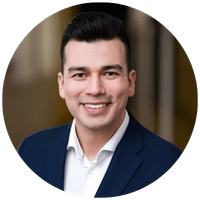 Reuben C. Kapp
Moderator
 Ian Bridges
Panelist
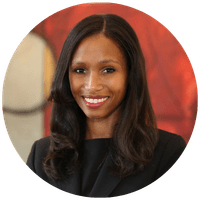 Ashley Hughes Austin
Panelist
 Susan Carter
Panelist
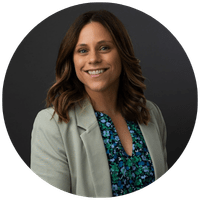 Kelly Hence
Panelist
Please note that the following transcript has been edited for clarity.
Kerry O’Brien
Good afternoon, everyone, and thank you for joining us for Scholarship America’s Partner Convening Webinar Series. I’m Kerry O’Brien, and we are thrilled to have you as part of the panel, Reaching Students Where They Are: Innovation and Outreach.
Today we will be asking, how do you break through the noise and make students aware of your scholarship program? From gamified recruitment tools to influencer-driven campaigns, the panelists will share inventive tactics to meet students where they are and drive stronger applicant pools. This discussion will highlight outreach innovations, campus and community engagement channels, and employer partnerships that remove barriers and increase equitable access.
With an increasingly diverse student population and increasingly fragmented media, there is no one perfect solution to connecting students with your scholarships. Today, we will talk with sponsors about what strategies work and what they have learned along the way. And with that, I would like to introduce and thank Jenn Clark from Imaginable Futures, our panel sponsor, who will be introducing the moderator and the panelists.
Jenn Clark
Thank you so much, Kerry, and thank you to Scholarship America for hosting this conversation today. I’m Jenn Clark, and I lead strategic communications for the U.S. team at Imaginable Futures. We’re a philanthropic investment firm that works on equity and education across three countries, Kenya, Brazil, and the U.S. And in the US, we support a range of efforts to improve the success of the 1 in 5 college students who are also parents.
What do student parents have to do with scholarships in this conversation today? Well, most student parents struggle to afford college and basic living expenses for their families while they go to school, and they often slip through the cracks of institutional supports that exist to help other students who don’t have kids access college. And Scholarship America has been doing really great work to shine a light on the types of financial barriers that today’s students are facing, and how to reach them where they are.
So we know that the folks who are joining us today are really powerful partners in unlocking some more of those supports that can help more students get the education that they need to thrive. So I’m really looking forward to learning from this really rock star group of speakers today.
Jenn Clark
Our moderator is Reuben C. Kapp from the Kresge Foundation, where he supports initiatives focused on post-secondary access and success. His work emphasizes equitable outreach, systems innovation, and strategies that help students navigate pathways to and through higher education.
And then he’ll be moderating a conversation among our esteemed panelists, including Ian Bridges, who leads marketing efforts within Chick-fil-A’s Team Member Experience Group, focusing on engaging team members and their families around education and scholarship opportunities. His work blends digital strategy, storytelling, and employer-based outreach to drive participation and awareness.
Ashley Hughes Austin oversees talent development and performance initiatives at DLA Piper, including programs that support early career talent and students. She brings expertise in employer branding, internal communications, and building meaningful connections with prospective and current employees.
Kelly Hence works across social impact initiatives at Equitable Foundation, supporting programs that expand access to education and financial empowerment. She brings a strategic lens to outreach, partnerships, and ensuring scholarship opportunities reach historically underserved students.
And Susan Carter, who serves as Executive Director of the CLA Foundation, where she leads scholarship and education initiatives that support students pursuing careers in accounting and related fields. Her work emphasizes targeted outreach, equity-driven design, and strong partnerships with academic institutions. So, Reuben, I’ll turn it over to you for this fascinating conversation.
Reuben C. Kapp
Thanks, Jenn. And as you mentioned, really excited — we have a really cool panel today. We started off the conversation with this idea of cutting through the noise, and I’m gonna start kicking it off with Ashley with this question: with so many competing demands for students’ attention, what has surprised you the most about what does or doesn’t resonate with potential scholarship applicants?
Ashley Hughes Austin
Yeah, well, thank you so much for having me today. At DLA Piper, we are a global law firm, and we offer two scholarship programs, one for student athletes and one for veterans who are interested in attending law school, really gearing these folks up with the knowledge that they can thrive in a legal profession.
And what we have found has been incredibly surprising to me is that we started this out going to colleges and having pizza and lunches and saying, come join us, come hear from our lawyers — and we thought that would work really well. Everybody says food drives attendance. And we had really hit or miss success with that approach. What we have found over the last few years was that really meeting students where they were was so important.
And so, to that end, this year, we were really excited to sponsor the Student Veterans of America annual conference. We went to Colorado Springs — a huge room of veteran students, very interested in different areas, but also the law. We had our chair and CEO of our law firm with General Mattis on the main stage, and we were just thrilled with the number of students who came up to both of them after the presentation, who wanted to learn more, and then followed us to our breakout room. We had great attendance, we had really rich and deep conversations with folks, and got them into our pipeline.
Finding that kind of area where we knew we had a captive audience — where they weren’t distracted by all the different things going on on campuses — was really, really useful and impactful for us, and something that I think we will continue to look for in the future: opportunities to meet those student-athletes and veterans who are interested in going to places where they’re already primed and focused on what we are offering.
Reuben C. Kapp
Ashley, thank you so much. I think what really stuck out for me, and what really resonates, as you said this a few times, of really meeting students where they are. That’s a good transition for us to speak to whether Kelly or Ian want to talk a little bit more of this idea of meeting students where they are, but specifically in outreach strategies. How have you adapted your outreach strategies and meeting students where they are, or where they’re already spending their time, whether that be online or at work in their communities? Kelly, I couldn’t hear you — let’s jump to Ian real quickly, and then Kelly, we’ll see if we can figure that out for you.
Ian Bridges
Absolutely, thanks so much, Reuben. Ultimately, the Chick-fil-A investment in scholarships is a little unique in that our partnership with Scholarship America really makes scholarships available to Chick-fil-A team members working in restaurants across the country. And so we’ve been really intentional about creating assets that local owner-operators can leverage to make their team members aware of the opportunity.
Through our partnership with Scholarship America, we’ve actually given team members the opportunity to opt into communication that allows them to learn more about the scholarship and the opportunities made available to them through their employment with Chick-fil-A. And then Scholarship America has also partnered with us to make a team member resource hub available, so team members are actually able to access critical information about their scholarship opportunities, key deadlines, and that sort of thing on the go — which is something that we’ve found to be really, really important.
Kelly Hence
Thank you so much. I’m so thrilled to be with you all this afternoon. I just want to take a quick step back to let you all know what Equitable is, and provide a little bit of context of our old ways of doing things and what we’ve pivoted to in order to better support and find students who need it the most. We’re a holistic financial services company, and our main goal is to help support our clients through retirement and long-term wealth planning services. We’ve got business lines in wealth management, life insurance, employee benefits, and retirement. We’re actually proud of the fact that we’re the largest 403B provider in educator retirement plans across the country.
So with that, we really leaned on our financial professional wealth management networks and workforce in the beginning stages of our scholarship. Since inception — we started in 2003 — we’ve awarded $30 million in scholarship funding to over 7,400 students. We’re really proud of that longevity and support systems for our scholarship recipients.
But we were just needing to find alternate ways to find students who need it the most. Back in 2020, our new foundation president at the time sat down and met with our equitable CEO, Mark Pearson, and Mark was very frank. He said, ‘I Google-mapped our recipients’ houses, and I was finding gated communities, pools, nice cars in the driveway. So how can we approach our scholarship to be more impactful and find students who really need it?’
So beyond our target outreach, we pivoted from our financial professionals — they were our big lever of getting the word out from 2003 to 2021. In 2022, we actually moved to a new model, got away from a one-time award, and now we’re doing renewable awards. We’re partnering with community-based organizations who are already supporting students who are looking to go to college, providing holistic support systems — not just funding, but college tour programming, the importance of FAFSA, how to pay for college. We’re really meeting students where they are, at those trusted organizations that they already have a relationship with, showing up not just as a funder but asking what else we can provide beyond the funding.
And one last thing: in our application, we now require financial need, which was not something we had back in 2003, but something we’ve been implementing the past few years since we’ve seen a drastic change in our cohort demographic.
Reuben C. Kapp
Kelly, I really appreciate you talking about equity and finding those students who are eligible for scholarships who may not know that they are eligible. I’m gonna pitch this one to Susan, and wondering if you can elaborate and expand more on equity and outreach, but more specifically, how do we ensure that outreach strategies meet those students who may not see themselves as scholarship material? And Ian, if you have a few words you might want to add, please jump in too.
Susan Carter
Well, I love that. Thanks for having me. I’m so thrilled to share this conversation with all of you. I will just invoke my father — rest in power — who told me early on that the one thing no one can ever take away from you is your education. It is a primary tenant of your pathway in life, regardless of what that might mean. So this work is deeply personal to me.
But also, using that equity lens: now, CLA Foundation is a brand new partner with Scholarship America. We’re just in our second year and we’re learning so much. And one of the things we really did exclusively — and I’ll share honestly, I was raised in love, but not without trauma, as so many people are — circumstances that are beyond your control often impact your success trajectory. And so we thought about that from the very beginning in our design.
We work actively with CLA, a professional services firm of about 10,000 people strong across 130 locations across the country. We lean heavily on our recruiting team when they’re out in campus spaces, and especially with our program specifically targeting HBCUs and affinity organizations in the accounting and professional services space — the National Association of Black Accountants, Ascend, and so many others that are trying to attract people to this profession who wouldn’t otherwise consider it.
But I think what was important to me, and interesting to our board, was when we talked about the design: we didn’t ask for a 4.0. We didn’t ask for a 3.5. We didn’t ask for a 3.0. We used the same criteria we use in recruiting students and interns. So we lowered that bar. Does that mean we lowered our expectations? It does not. It means that we’re capturing kids that wouldn’t otherwise be considered in that traditional pool — for academia and for scholarships. And what we’ve found is that even with that criteria in place, we’re still getting just the most extraordinary people applying who have really wonderful, tender stories about how they got to where they are.
We also make sure that this is not a benefit for CLA and its employees — this is truly a community benefit. We work in our nonprofit industry, and CLA has one of the largest nonprofit industry client bases across the country. So we’re reaching out to program providers in the nonprofit space that may have come across a person who would be a great candidate. We also allowed this to be for recent graduates, people in current study, graduate work or certification reimbursement, and for returning students.
And I’ll leave you with this: one of the letters we got after our first year was from a woman who told me that she had all but given up on herself and her education. That she made the sacrifice and the decision to support her three children as a single mother after circumstances took her far away from an academic path. And that not only was the money important to her to return to her studies, but maybe even more important was the belief that someone out there in the world believed she could do it. She didn’t feel alone in the work. She would have the solidarity of CLA and all of our employees and our support to say: you can do it, and we’re going to make sure that happens for you. That’s really one of the things that we think is a prideful component of the work we’re doing when we’re reaching all types of audiences for our scholarship.
Reuben C. Kapp
I love that. That was beautiful. Susan, I want to stick on this a little bit more and open it up to the other panelists, because I think you really touched on this idea of building trust — trust with your board of saying, okay, we don’t need the student with the 4.0 and 17 AP classes. We can open the doors for other students who are also great. For the rest of the panelists: how do we build trust at a distance? More specifically, thinking about organizations that don’t have physical campuses or storefronts, how can they build trust and personal connection with applicants and scholarship recipients? Ashley, I know you haven’t talked in a while, so if you want to jump on this one, this would be great.
Ashley Hughes Austin
Yeah, I mean, I think partnering — as Susan mentioned — with the National Association of Black Accountants, or partnering with other organizations that are in the community and working frontline with these constituencies is really powerful. One of our strongest recruiting tools is picking up the phone and speaking with people from the Posse Foundation, from other foundations that are already frontline and have the trust of the people in their communities.
Because then you can have somebody in Arkansas, somebody in Texas, somebody in Massachusetts — all of these folks working to spread your word more locally. That person the guidance counselor knows, the one students have gone to before — they can pick up the phone and call us. Whereas those students might be a bit intimidated to call a big law firm and say, hi, how do I do this?
But they’ve had somebody connect us, and then they get the right friendly face at the end of the other line that says, yes, this is for you, let’s chat. When do you have time? After soccer works, after football practice at 7:30 works, or after your job — whatever that is. And that makes all the difference: that first person they speak with within our organizations being somebody who is available, is flexible, and who had that trusted advisor in the middle.
Kelly Hence
Yeah, I’ll just say quickly, from a funder’s perspective, we really lean in on the fact that we know that we’re not the experts, but we’re here to provide supplemental resources beyond funding for our partners — whether it’s volunteerism, workforce, things within our company, our real estate. Nonprofits use our space all the time for their internal meetings. Realizing that we bring value, not necessarily always on the expert side, but just other things within our ecosystem. And then to touch upon board trust: we also love to bring the perspective of nonprofits into our quarterly or yearly board meetings, so they’re not just hearing it from us. They’re hearing it from our trusted partners about the real, true impact that we’re making — whether from their organizations or the students that they serve.
Susan Carter
I would just add two other little pieces about trust. We’re all across the country, and we’re all trying to matter in our own backyards. For us, our scholarship is designed to be regionally proximate. We’re empowering our local offices across the firm to be the outreach coordinators or ambassadors of the scholarship in their own communities. We provide office locations, and scholarships need to be within a 50-mile radius of those office locations. So not only did we get a really wide, diversified regional representation, but our people are the ambassadors for the work when they’re out in their community — when they’re coaching t-ball, when they’re at the soccer game, when they’re at PTA, when they’re in the pews. Whatever they’re doing, they become ambassadors of the work in their own backyard, which makes it a little more human, maybe a little bit more personal.
The other thing our firm started doing a couple years ago is a high school internship program — a month-long program where we get high school interns. Those interns embark on a foundation exercise with us, going through the process of identifying a nominee, vetting the organization, creating a video that gets presented to our foundation board. Then we select two of all of the cohorts across the country to receive a financial grant from us.
Why does that matter? Because those high school students are going to be choosing where they’re going to school and forming their opinions about their career trajectory and the professions they choose. This has also been a great way locally to get high school students talking to other high school students about the opportunity itself.
Reuben C. Kapp
Thank you, really appreciate those. So we talked about trust — but on the same side, we also have to look closely at how we measure or define success. I’d love Ian to kick this off: how do we define and measure success when it comes to student engagement, both before the application and after awards are made?
Ian Bridges
Absolutely. Thanks, Reuben. As we think about measuring our success and effectiveness in engaging team members — or scholarship applicants in this instance — we really focus on understanding team members’ level of awareness. I previously mentioned that our scholarship program really focuses on making scholarship opportunities available to the Chick-fil-A team members working in the thousands of restaurants that exist across the country. And so one of our biggest metrics of success is just ensuring that those team members know that this opportunity exists and is available to them. And then we also determine success by the level of participation and engagement that we see.
One thing that we’ve done to really increase the relevance and availability of the scholarship program — it touches on the equity piece as well — is being intentional about expanding the eligibility of the program. Education and a commitment to education is core to who Chick-fil-A is. Our founder, Truett Cathy, launched a scholarship in an informal capacity way back in 1955, and the organization has continued to invest in scholarships in a formal capacity for over 50 years. But one thing we found to be true is that not every team member sees themselves as a traditional scholarship recipient. In the US, scholarships are typically associated with individuals on a traditional 2- or 4-year academic path, and so we found that success is really ensuring that every team member sees themselves as someone worth being invested in and someone who can be a lifelong learner.
So by expanding our eligibility criteria to include non-traditional schools, and by expanding the definition of community service to actually include individuals with caregiving responsibilities — because we know that not every working adult has the free time to dedicate to a traditional community service activity — things like taking care of aging parents or providing support to siblings are definitely acts of service that warrant inclusion. One of our success metrics is the accessibility of the program, and making shifts like those I just described have definitely been ways for us to make the program more accessible.
Kelly Hence
Yeah, so back in the early 2000s when our scholarship started, we were awarding 300-plus scholars across the country at all types of amounts — $5K, $15K, $20K. But there really was no intentionality around the engagement: how are we gonna engage our scholars moving forward as they’re going through school?
So in 2022, we readjusted our award model to include renewable awards. We award 100 scholars, limited the pool from 350 down to 100 each year, and we award them $5,000 for up to 4 years, totaling $20,000 — implementing a model of recurring engagement. We also provide quarterly workshops for our scholars who are currently in college, centered around resume writing, interview skills, personal branding, and wellness workshops, to bridge the gap beyond the funding and provide additional resources. We also try to include alumni connectivity, trying to figure out how we can continually engage our scholars from freshman year all the way to senior year.
Our first renewable cohort from 2022 is actually getting ready to graduate this spring, so we’re really excited. We’re implementing a survey and some research to see what impact our engagement over the past four years has had — we’re excited to see those results soon.
Reuben C. Kapp
I do want to bring it back a little bit, because I think we started the conversation thinking about meeting students where they were and innovative practices. With 80 participants on this call, I’m wondering: thinking specifically about those innovative outreach tactics — if you can share an outreach experiment, whether successful or not, that has changed how you approach student engagement?
Kelly Hence
I’ll chime in first. This past couple years, we’ve forged strong partnerships at the district level of public high schools — starting conversations at the district level, getting in front of juniors and seniors. We’re talking about some of the topics I mentioned earlier: how to pay for college, the importance of FAFSA, how to fill it out, how to create an affordable college list — really just getting in front of these students and getting their brains turning on how they can go to a two- or four-year school with either no debt or as little debt as possible. Those topics also allow us to organically integrate our scholarship opportunity. We’ve seen great success in starting at the top and going down and meeting students right in the classroom.
Ian Bridges
I’m happy to jump in as well. Something that we’ve done more recently — and just to remind folks, at Chick-fil-A, it is local owner-operators who make the opportunity available to their team members, and they’re typically the vehicle through which this opportunity is promoted.
A unique engagement tactic that we have really leaned into more recently is making customizable resources available for those local owner-operators to promote the opportunity among their team members in a physical way. While digital assets have really become the primary communication vehicle, we’ve gone back to basics and made templates available that operators can customize and then print to actually hang up in their restaurants and remind prospective applicants of this opportunity.
The inclusion of QR codes that take prospective applicants right to the application, clarity around the deadlines, and being physically present in the team members’ space has really proven beneficial in terms of increases in applications. So we’re really excited about just the ability to take a few steps back and go back to practices that were more common a little while ago.
Reuben C. Kapp
Sometimes it’s really helpful to bring it back to old school, right? You think about this idea of pen and paper — but seeing that is critically important as well.
Reuben C. Kapp
Let’s jump to this next question: how does Scholarship America support or amplify your outreach efforts? And what value does a centralized platform bring to engagement?
Susan Carter
I’m happy to jump in. I don’t know who’s on this call, but I’m talking directly to you. Sometimes, as an individual that leads a foundation with just two staff, you go to these webinars and these conferences, and you get really excited about programming — and then you realize who you are. You’re 3 people strong, you’re managing all of this work.
Our scholarship program is not possible without Scholarship America. And I mean that very seriously. When we thought about the fact that we wanted to, as part of our education pillar, deepen our relationships with students by providing scholarships, I knew right away because Scholarship America had been a previous partner. Not only are they thought leaders with us and help us distill our criteria and our hopes and dreams into something tangible, but their muscle around marketing and communications and strategies, digital imagery, social posts, things of that nature — which, for a group of 2 or 3, we just wouldn’t be able to manage on our own.
But because of Scholarship America, it feels like we have 10 more staff that are helping to level the playing field for the small among us. So if you’re sitting in this webinar thinking, well, that’s great for Coca-Cola or LEGO — it really is for you too. I think they meet you where you are, and they follow where you lead, and they can do something very simple to very complex.
We’re really excited about growing the size of our scholarship program over the coming years, and it’s all because of the first two years of really great success and feedback. But it’s not possible without someone that has expertise in this space, and that is Scholarship America.
Reuben C. Kapp
So it is possible with two people, right? We heard that. With the help of Scholarship America, right? Ashley, I saw you nodding when Susan was mentioning something — did you want to chime in?
Ashley Hughes Austin
I’d love to jump in there and just echo that — even as part of a larger organization, many people at larger organizations have other responsibilities as well, and so having Scholarship America with their institutional knowledge and their ability to administer has allowed us to scale, which has been really great. Whereas we would have been able to manage a much smaller program, they have allowed us to think bigger and reach more people, because they have taken that administrative burden off of us.
And also what Susan said about helping to think about criteria and where to meet people — thinking about lowering GPA requirements, whether to get rid of them altogether, how to make sure that we are leading with equity and leading with the people that we want to serve. Scholarship America has been a great thought partner in that because they have seen it in so many different permutations. It kind of allows us to say, okay, we have an expert here with us to help guide and really consult with us to bring our vision to the people that we want to help, and to make our profession even stronger.
Reuben C. Kapp
Something that really resonated with me — and I think I saw some likes when we were talking — is this idea of community. I wanted to give us justice to talk a little bit more about how that’s important and how that shapes the work we all do and what the future might look like. Community: what does that mean for us when we think about students in 2026 and beyond? Let’s leave with that.
Susan Carter
Well, this is a very ethereal question, so Reuben, thanks for getting us thinking aspirationally. I’m headquartered in Minneapolis, Minnesota. And if you’ve been watching the news recently, you know that sometimes people need community to stand up for them, to fight for the things that matter most, to show up with one another in solidarity and in supportive environments.
And so for CLA Foundation, community in general — and the reason we invest in this program — it’s because we see the possibility, the unlimited potential, and showing up for these students as another person in their lives saying, I see you, and I believe you, and I can’t wait to see what you’re becoming.
I think those are the pieces for us that are really about how we show up in communities. We talked about our regional strategy — showing up in your own backyard with the people you know and love in the areas you live, work, and play. Those are all really important things. But more than anything, we think it transcends the gift, as so many letters have indicated to me. It’s really about: I didn’t think I could do it, and then I got your scholarship and realized someone else thinks I can. That’s really how we define our community and the community building we do.
Kelly Hence
Yeah, I think I’ll just echo her sentiments in saying that I’m based in Syracuse, New York. We have 3 office locations and we do a lot of partnership work in Syracuse, Charlotte, North Carolina, and we also have a corporate office in New York City. To have the opportunity to support students right in our backyard, to expose them to colleges through tours, to talk about the importance of how to pay for college, also careers — we’re literally the biggest building in our little small city of Syracuse. We have the time and the temperature on top, and when we talk to students, that’s literally how they know what we are. They don’t know what we do specifically, but they know where we’re located, and so being able to go out into the community, to high schools in our backyard, and provide these opportunities for students is very meaningful.
Reuben C. Kapp
Well, thank you. This is excellent. Our panelists survived the dissertation questions from my end, and now we get to pass it on to folks who have questions from the audience. So I’ll pass it to either Jenn or Kerry on this segment, but thank you, panelists, for diving into these questions. Really appreciate it.
Kerry O’Brien
Thank you so much, Reuben, for being an amazing moderator, and to the panelists for all of your amazing reflections and pieces of advice. Again, this is another emphasis that it really takes a whole community to support students and their higher education pursuits. We did have a few students write in with questions, and the main through line was: what’s one next step I can take if I’m a student looking for scholarship opportunities? If any of you just want to unmute and give a next step of advice for a student looking for funding.
Kelly Hence
I’ll say, when I go into high schools and talk to juniors and seniors, the one takeaway I say — if you’ve got anything from me, the one thing I want you to write down is Scholarship America, because they are the entry point of all sorts of scholarship opportunities that you might be eligible for. Whether you’re in college, you’re in high school, you’re doing certain programs — there’s always potential opportunity to align with scholarships on that portal. It’s a huge portal. All you have to do is make a profile and see what opportunities you have. So that’s an easy first step.
Susan Carter
I can offer a next step from CLA Foundation. Yes, exactly what Kelly said — get into the portal with Scholarship America. But mark your calendars for April 7th, folks! That’s our deadline — our grant application will open.
So if you know people — someone mentioned earlier that we’re looking to support people interested in accounting. I don’t know how many kids these days say, ‘I want to be an accountant,’ unless maybe someone in their family was. But we’re also doing professional service work here, so keep in mind — that’s AI, machine learning, risk, technology. It’s so many different parts of how our industry is changing and how many minds we need to bring to the task. There’s so many components of it, it’s really a broad bubble.
So, April 7th, if you know somebody you think needs to know about this, please send them to Scholarship America. It’s the CLA Foundation Opportunity Scholarship, and we’re so excited to hear from all of you.
Kerry O’Brien
Well, thank you so much, everyone. Again, thank you to Imaginable Futures for sponsoring this panel, for our amazing panelists and moderator, and for those of you who attended today. I do also want to flag that on April 23rd, we’ll be hosting another webinar about supporting students with disabilities and health challenges, so stay tuned for more information on how to register for that. Let’s keep this community going. Thanks, everybody. Have a great afternoon.
As our panelists said, you don’t have to figure it all out on your own. Scholarship America’s team is here to help you design, launch, and manage a program that makes a real difference.
Leading sponsors focus on removing intimidating barriers from the application process — lowering GPA requirements to match real-world recruiting standards, partnering with trusted community organizations students already have relationships with, and broadening eligibility to include non-traditional academic paths. The goal is designing the scholarship so that the right students feel invited, not filtered out.
The most effective corporate scholarship outreach combines digital opt-in communication, physical in-person materials like printed flyers with QR codes, and presence at events where your target students are already gathered and focused. Sponsoring conferences, partnering with community organizations, and empowering local employees as regional ambassadors have all proven more effective than broad, passive awareness campaigns.
Partnering with a scholarship administrator like Scholarship America allows small teams — even those with just two or three staff members — to run professional, scalable scholarship programs. The administrator handles marketing, application management, compliance, and communications, so the sponsoring organization can focus on strategy and student relationships.
Equity-centered scholarship design means rethinking every eligibility requirement to ask: does this exclude someone who deserves to be here? In practice, that looks like requiring demonstrated financial need, accepting caregiving responsibilities as community service, opening eligibility to returning students and non-traditional learners, and partnering with HBCUs and affinity organizations to actively recruit students from underrepresented backgrounds.
Forward-thinking sponsors measure success through awareness (do eligible students know the opportunity exists?), accessibility (has eligibility been designed to include everyone who qualifies?), and long-term engagement (are recipients supported through workshops, alumni networks, and renewable funding throughout their studies?). Application volume and cohort diversity are also key indicators that outreach is working.
Renewable awards create an ongoing relationship between the sponsor and the student, which increases accountability, engagement, and completion rates. Sponsors who have shifted to multi-year awards report stronger cohort identity, more meaningful alumni connections, and a deeper sense of community — for both the students and the organization funding the scholarship.


Our team is here to help you achieve your goals and build your custom scholarship program.